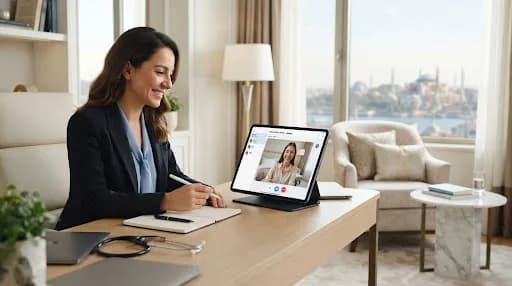
A remote appointment lets you discuss a health concern with a clinician during your stay in Istanbul. CNR Medicare coordinates the appointment and practical details.
The available consultation method is explained before the appointment is confirmed.
24/7 request line
WhatsApp and phone requests are accepted 24/7; appointment times depend on clinician availability.
Remote-care limits
A clinician may recommend an in-person examination, testing or another care setting.
PRICING & SUITABILITY
Before you book
Quoted consultation fee
The consultation method, appointment time, scope and fee are confirmed before you book.
Remote-care limits
A clinician may recommend an in-person examination, testing or another care setting.
Individual clinical decisions
A consultation does not guarantee a document, medicine or prescription; the treating doctor decides what is clinically appropriate.
An online doctor consultation is a scheduled clinical conversation, not a form that automatically produces a diagnosis. It can help a visitor in Istanbul explain a new, non-emergency concern, ask about a change in symptoms and understand whether remote advice is enough. The clinician decides what can be assessed by video or phone and whether physical examination or testing is necessary.
What a remote consultation can clarify
A traveller might develop a cough, stomach symptom, rash or headache while far from a familiar doctor. Another person may have a question about a condition already assessed at home. In a remote consultation, the clinician asks about the concern, considers the answers in context and explains which next steps are reasonable. You can describe the symptoms in your own words. The clinician can ask for details that would be hard to fit into an initial message, such as exactly when something changed or whether another symptom appeared at the same time.
The value of the appointment depends on the question and the information available. A call can help identify whether advice and observation may be enough, whether another appointment is needed, or whether examination or testing should be arranged. It cannot reproduce every part of a physical examination. Even when you show an area of concern on video, lighting, image quality and the absence of hands-on assessment can limit what the clinician can conclude. The treating professional is responsible for explaining that limit rather than presenting a remote opinion as more certain than it is.
Give the doctor a useful symptom timeline
Begin with what is bothering you most and when it started. Say whether the problem appeared suddenly or built gradually, whether it comes and goes, and whether it is improving, staying the same or worsening. Mention a measured temperature if you have one, and say when it was measured. Describe anything that makes the symptom better or worse. For a rash or injury, explain where it began and whether it has spread. If you are asking on behalf of someone else, say who is affected and whether that person can take part in the conversation.
Have a list or photographs of the packaging for medicines you take regularly and any medicines used since the symptom began. Tell the clinician about known allergies and what happened during the reaction, not only the name of the substance. Relevant conditions, recent surgery, pregnancy when applicable, and earlier care for the same concern may change the assessment. You do not have to gather every record you have ever received. Select results or discharge notes that bear on the current question and send them only through the channel agreed with the clinician or coordination team.
Get the technical and private setting ready
When the appointment is offered, confirm whether it will use video, telephone or another specified method. Test the device, connection and audio before the call. A video appointment may require a working camera and enough light if the clinician needs to see something; a phone discussion can answer some questions but offers fewer visual details. Keep the phone number used for the booking reachable. If the connection is interrupted, use the agreed contact route to let the team know rather than assuming the medical discussion is complete.
Choose a room or corner where you can speak without being overheard and can refer to your notes. Ask a companion to join only when that would help you communicate, and tell the clinician who else is present. For a child, the appropriate parent or caregiver should be available to provide the history. If you need language support, state the preferred language before the appointment and have the actual arrangement confirmed. Availability of a translated page or message is not proof that the clinician for a particular slot can conduct the consultation in that language.
Know when the screen is not enough
A clinician may need to listen to breathing, examine the abdomen, assess circulation, perform a neurological examination or obtain a test before making a decision. Video can sometimes add context, but it cannot provide those findings. Be prepared for a recommendation for a hotel doctor visit, a clinic, laboratory testing or another suitable service. That recommendation is a clinical decision, not a failure of the online appointment. CNR Medicare can help coordinate a separate service when appropriate, while the clinician determines which setting is needed.
Tell the team if your condition changes before the appointment. If you feel substantially worse during the wait, seek prompt medical advice at the level the situation requires.
Understand the clinician's advice before leaving the call
As the consultation ends, ask what the clinician thinks the next step should be and why. If monitoring is advised, clarify which changes matter and when another assessment should be sought. If a medicine is discussed, ask for the purpose and instructions relevant to you; a prescription is issued only when the treating clinician considers it appropriate and applicable requirements are met. If a test or physical examination is needed, ask whether it should precede any other action and how the result will be reviewed.
Write down the main points while they are fresh, or ask about any record that will be provided through the agreed process. A consultation may answer the initial question but leave a need for follow-up. That later service may be a separate appointment. If you will return home soon, ask what information you should take to your usual clinician. Do not assume that an online consultation alone provides a travel clearance, insurance certificate or other document unless that item was specifically assessed and issued.
Book with a clear view of scope and cost
CNR Medicare receives your enquiry and checks available appointment options with the relevant provider. Before confirming, review the planned consultation method, the proposed time, the language arrangement and the quoted fee. Ask whether any document, follow-up or coordination of an additional service would be a separate item. The first message starts an enquiry; it does not itself reserve a consultation or establish what a clinician will prescribe, diagnose or write.
Briefly say if you need the appointment for a child, if a flight or scheduled procedure makes timing important, or if a prior clinician has asked for a specific follow-up. These details help the team communicate the practical need without deciding the medical outcome in advance. CNR Medicare coordinates contact and logistics. The clinical provider decides whether the remote method is suitable and what recommendations can be made from the assessment. If your main need is documentation or a medicine, name that purpose at the start so the correct service can be discussed.
1Send a concise enquiry: State who needs the consultation, the main concern, preferred language and a way to reach you.
2Confirm appointment details: Review the proposed time, consultation method, clinician and quoted fee scope.
3Join from a private place: Use the agreed connection with your symptom notes, medicines and relevant records nearby.
4Review the recommendation: Ask what to do next, what to monitor and when to seek another assessment.
CNR Medicare coordinates medical services for visitors in Istanbul. We are not a hospital or a clinic: examination, treatment and laboratory analysis are carried out by the licensed health professionals and partner facilities we work with.
Send your request
Leave a contact number and a brief request. The team will clarify the proposed arrangements with you.
At your location
Frequently asked questions
Is an online doctor consultation a diagnosis by video?
It is a clinical assessment through the agreed remote method. The clinician may be able to give advice or a working assessment, but some questions need physical examination or tests. The limits should be explained during the appointment.
Can I use my phone from my Istanbul accommodation?
You can join from a private place with a suitable connection using the agreed method. Check the device and contact number beforehand. Your location does not remove the need for an in-person assessment if the clinician recommends one.
What should I say in the first appointment request?
State who the patient is, the main concern, when it started, your preferred language and your availability. The coordination team can ask for further practical information. You can give the fuller medical history directly to the clinician.
Do I need to upload all my medical records?
No. Have records that are directly relevant to the present concern ready and ask how to share them privately if needed. A complete archive may make the immediate question harder to assess.
Can a child have an online consultation?
Mention the child's age and concern when requesting the appointment. A parent or appropriate caregiver should be available to provide the history. The clinician decides whether a remote assessment is appropriate for that child and symptom.
What happens if the doctor asks to examine me in person?
Ask which setting and how promptly the examination is needed. CNR Medicare can help coordinate a separate suitable service, subject to availability. Do not treat the online discussion as a substitute for the examination the clinician requested.
Will a prescription or report be part of the call?
Those are clinical decisions, not automatic inclusions. Tell the team if either is the main reason for your request, then clarify the quoted scope. A clinician may need additional information or an in-person examination.
How is the consultation continued if my internet disconnects?
Use the contact channel agreed for the appointment to report the interruption. The team and provider can explain what happens next based on the stage reached. If symptoms worsen, seek appropriate medical care without waiting for reconnection.
Can someone else speak for me during the appointment?
A caregiver or companion can help communicate when appropriate, but the clinician needs to know who is present and who the patient is. The provider determines what direct participation is required for an adequate assessment.
Need help right now?
Message us on WhatsApp to arrange an online consultation.