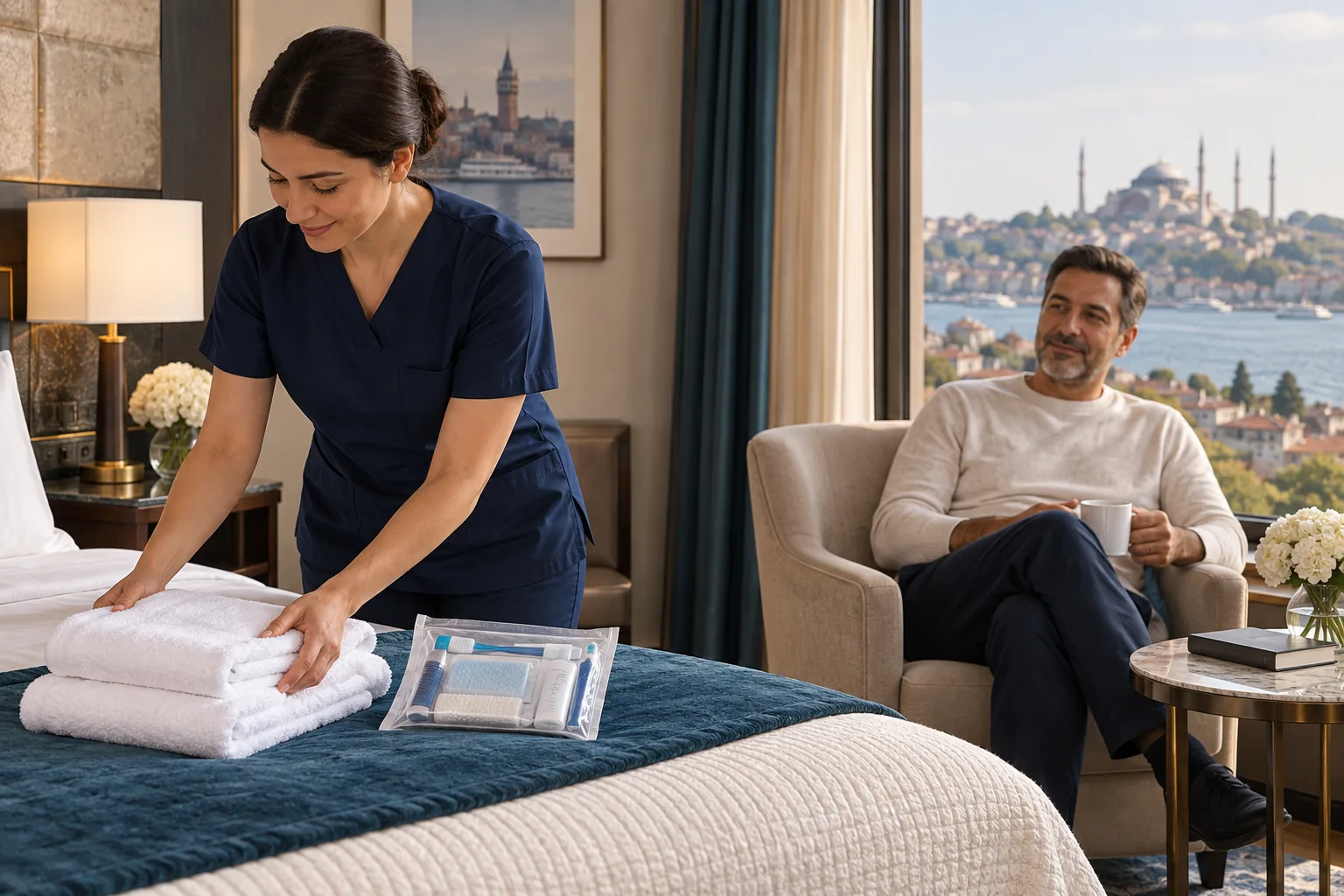
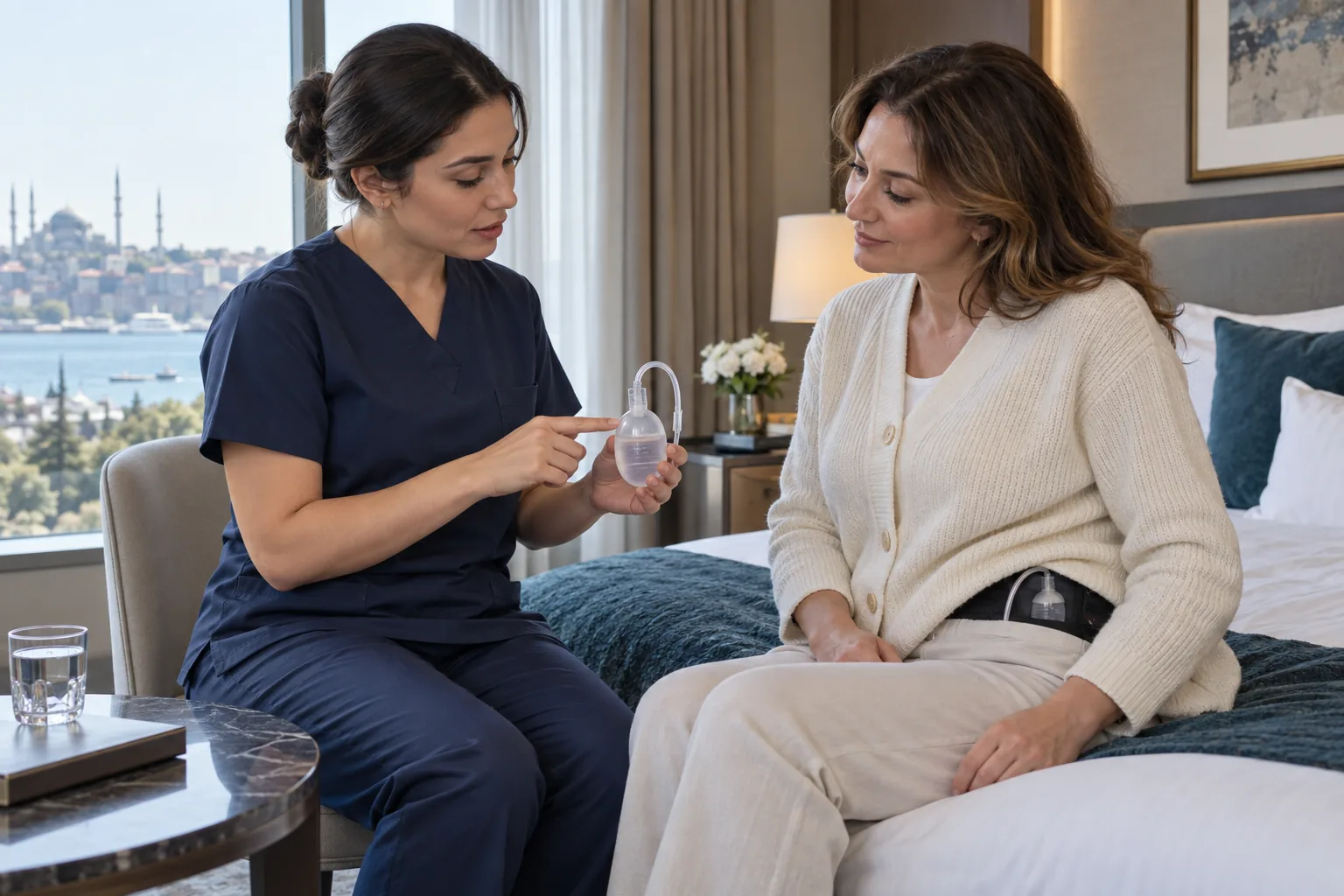
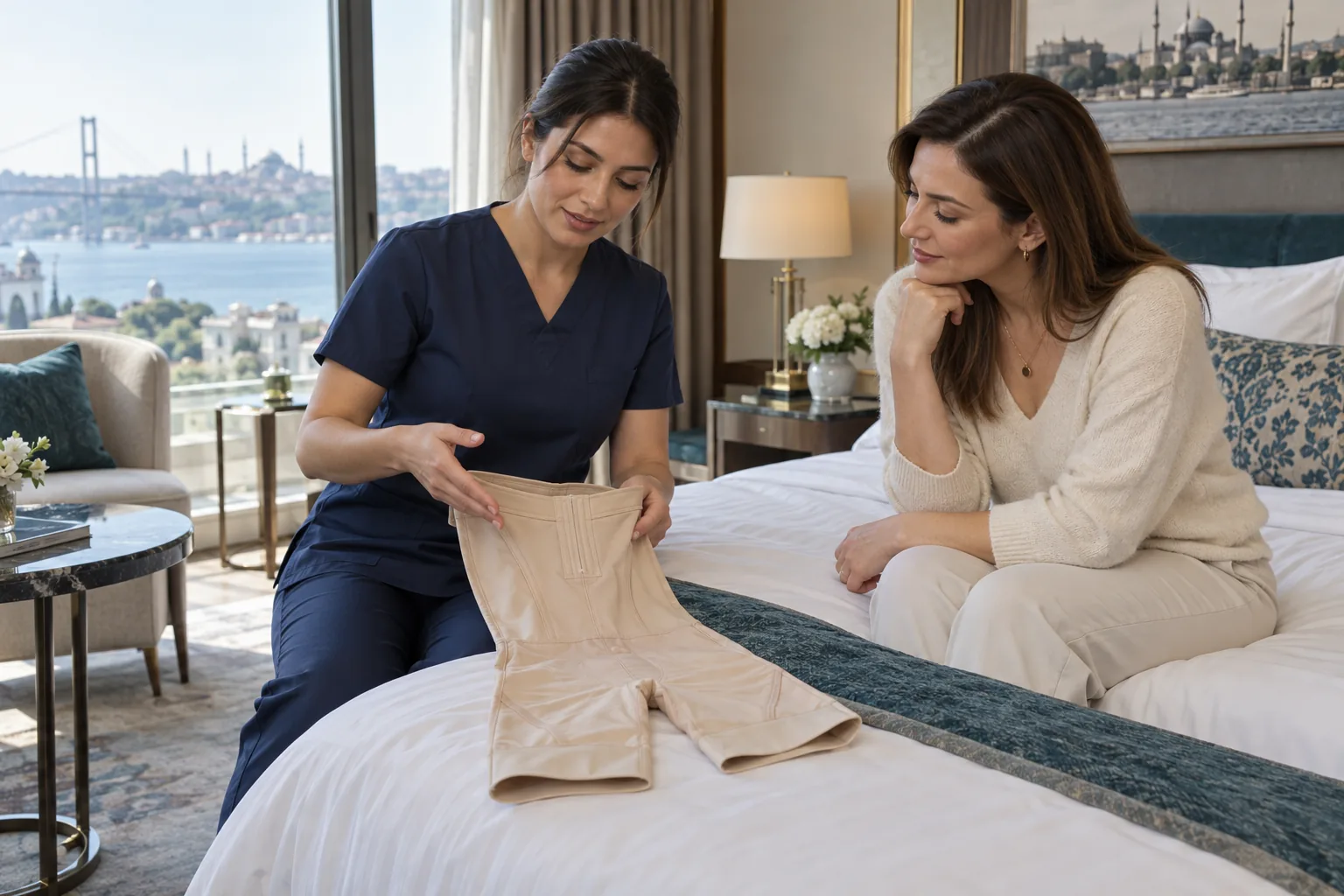
Personal care may be difficult after surgery. Arrange suitable help with washing and dressing while respecting your surgeon’s restrictions and privacy.
Ask about nursing or companion support at your hotel
Roles explained clearly
Nursing tasks and non-clinical companion support are discussed separately.
Plan-based coordination
Clinical tasks may require instructions from the treating team.
24/7 request line
WhatsApp and phone requests are accepted 24/7; the requested role and schedule remain subject to availability.
PRICING & SUITABILITY
Before you book
Quoted fee
The role, schedule, included tasks and quoted fee are confirmed before booking.
Nursing and companion roles
Clinical nursing tasks and non-clinical companion support are defined separately.
Recovery expectations
Aftercare supports an agreed plan but cannot guarantee recovery speed or outcome.
Hygiene assistance concerns ordinary personal care when reaching, bending or standing is difficult during recovery. CNR Medicare coordinates an appropriate helper based on the patient’s needs and the treating team’s written restrictions. This service does not authorize washing an incision or changing a dressing against clinical advice.
Check the surgeon’s washing restrictions first
After surgery, washing and dressing can become difficult because the patient cannot bend, reach or stand for long. Begin with the surgeon’s written restrictions, particularly around the incision, drain, dressing or compression garment. Explain what the patient can do independently and which movements create difficulty. A helper needs the specific task, not simply the label “post-surgery hygiene.”
CNR Medicare coordinates practical assistance with a suitable provider. The treating team decides when a patient may shower and how the operated area should be protected. Hygiene support is distinct from a clinical dressing or wound-care visit. If the patient needs both, define and confirm each task separately.
Decide which personal tasks actually need help
Some patients can wash at a sink but cannot step into a shower; others can shower but cannot reach their hair or lower legs. The proposed helper should plan around the current restriction rather than a standard routine. If a full wash is tiring, identify the most important tasks and discuss what can be completed comfortably during the visit.
If the surgeon has not permitted showering, ask what method of washing is allowed near the operation site. A sponge bath is not automatically suitable for every incision or dressing. Keep any protective instruction available for the person assisting, and do not remove clinical materials merely to make washing easier.
Prepare the bathroom and protect privacy
Assess the bathroom before the visit: access, footing, available chair or handhold, water temperature and where clean clothing can be placed. Tell the provider if the patient feels dizzy when standing or needs help transferring between the bed and bathroom. A provider may conclude that additional equipment or another person is needed.
Personal care involves privacy and consent. Agree which tasks the patient wants help with, whether a companion may remain and how much can be done independently. Assistance should preserve dignity and avoid unnecessary exposure. Hotel staff should receive only the access information needed for the visit.
Adapt the plan to fatigue, pain and limited movement
Pain, fatigue and limited arm movement can change the order of washing, drying and dressing. The helper should follow the surgeon’s restrictions and pause if the patient cannot tolerate a task. A change in skin condition near a dressing or garment should be reported rather than managed with an unapproved cream or cleaning product.
The patient may need separate help to replace clean clothing or a prescribed garment after washing. Confirm whether that task is included and whether it requires a clinician’s instruction. A practical helper should not be asked to change a wound dressing or adjust a drain as part of the hygiene appointment.
Coordinate support at the accommodation
At a hotel, share the room address, entry process and products already available. Ask which towels, washing supplies or clothing the patient must provide. If the guest is alone, consider whether they can manage after the helper leaves, including access to water, the bathroom and any garment that must be refastened.
Moving to another room can change the bathroom layout and the amount of assistance needed. Tell the provider about a location change before the next visit. The arrangement should describe the tasks performed and the planned visit scope rather than imply ongoing supervision between appointments.
The patient’s comfort and consent should be checked during the task, not only when the visit is booked. A person may accept help washing their hair but prefer privacy for another part of personal care. Let the proposed helper know whether a companion can assist with clothing, towels or opening the bathroom door. Small practical details can make the visit more appropriate without turning a non-clinical arrangement into a nursing service. If any step conflicts with the surgeon’s restriction, stop and ask for clinical direction.
Pause and seek assessment when hygiene becomes unsafe
Dizziness, a fall, severe pain or a concerning change in a wound should interrupt the hygiene routine. Contact the treating team for clinical advice, and let the proposed provider decide whether the task can continue. The surgeon’s written plan remains the authority for restrictions and clinical care.
CNR Medicare coordinates the practical arrangement and any separate professional visit that the treating team recommends.
1Step 1: Contact CNR Medicare with your Istanbul location, preferred language, surgery date, current hygiene difficulty and the written bathing or movement instructions provided by your treating team.
2Step 2: Clarify the exact support requested, such as shower assistance, sponge bathing, hair washing, oral hygiene, intimate hygiene or help reaching areas that are difficult to wash during recovery.
3Step 3: Confirm the proposed provider, visit schedule, hotel access, required hygiene supplies, privacy preferences, movement restrictions and total proposed price before the appointment.
4Step 4: During the visit, the agreed personal hygiene tasks are carried out within the treating team's restrictions, with attention to comfort, privacy, fatigue, dizziness and movements the patient has been told to avoid.
5Step 5: Continue following the original postoperative hygiene instructions and contact the responsible clinical team if bathing causes new bleeding, marked pain, faintness, wound-related concerns or another significant change.
CNR Medicare coordinates medical services for visitors in Istanbul. We are not a hospital or a clinic: examination, treatment and laboratory analysis are carried out by the licensed health professionals and partner facilities we work with.
Send your request
Leave a contact number and a brief request. The team will clarify the proposed arrangements with you.
At your location
Frequently asked questions
What is Hygiene Assistance?
Hygiene Assistance provides practical personal-care help for postoperative patients who temporarily find showering, sponge bathing, hair washing, oral hygiene, intimate hygiene or other routine washing tasks difficult.
Can someone help me shower at my hotel after surgery?
Yes, shower assistance can be coordinated when your treating team has permitted showering and the requested support, hotel access and provider arrangement have been confirmed.
What if I am not allowed to shower yet?
When full showering is restricted, sponge-bath assistance may be an option if it fits your postoperative instructions. Areas that must remain dry or untouched should follow the treating team's directions.
Can Hygiene Assistance include hair washing?
Yes. Hair washing can be included when appropriate for your postoperative restrictions and current mobility, with the method adapted to movements you have been told to avoid.
Can I receive help with intimate hygiene?
Yes, discreet assistance can be requested when limited mobility makes intimate hygiene difficult. The visit should prioritize consent, privacy, respectful communication and only the level of help you request.
What if I feel dizzy while showering?
Stop the hygiene task and move to an appropriate resting position with assistance. Persistent or significant dizziness should be discussed with a healthcare professional, and loss of consciousness requires urgent assessment.
Does Hygiene Assistance include changing my surgical dressing?
Dressing changes are a separate wound-care task and are not automatically included in Hygiene Assistance. The hygiene visit follows the agreed personal-care scope and your treating team's bathing restrictions.
What should I prepare for a hotel hygiene visit?
Prepare the hygiene products and clean clothing you normally use unless another arrangement has been agreed. Share your postoperative bathing and movement instructions and tell the team about any bathroom access limitations.
Can Hygiene Assistance be arranged more than once?
Yes, repeated visits can be discussed when temporary mobility limitations continue. Confirm the visit schedule, tasks and proposed price before the arrangement begins.
How do I arrange Hygiene Assistance with CNR Medicare?
Contact CNR Medicare with your Istanbul location, preferred language, surgery date, current hygiene limitations, treating-team instructions and the exact help you need. The team can coordinate the provider, visit schedule, hotel access and proposed price before confirmation.
Need help right now?
Contact us to discuss your request and check service availability.