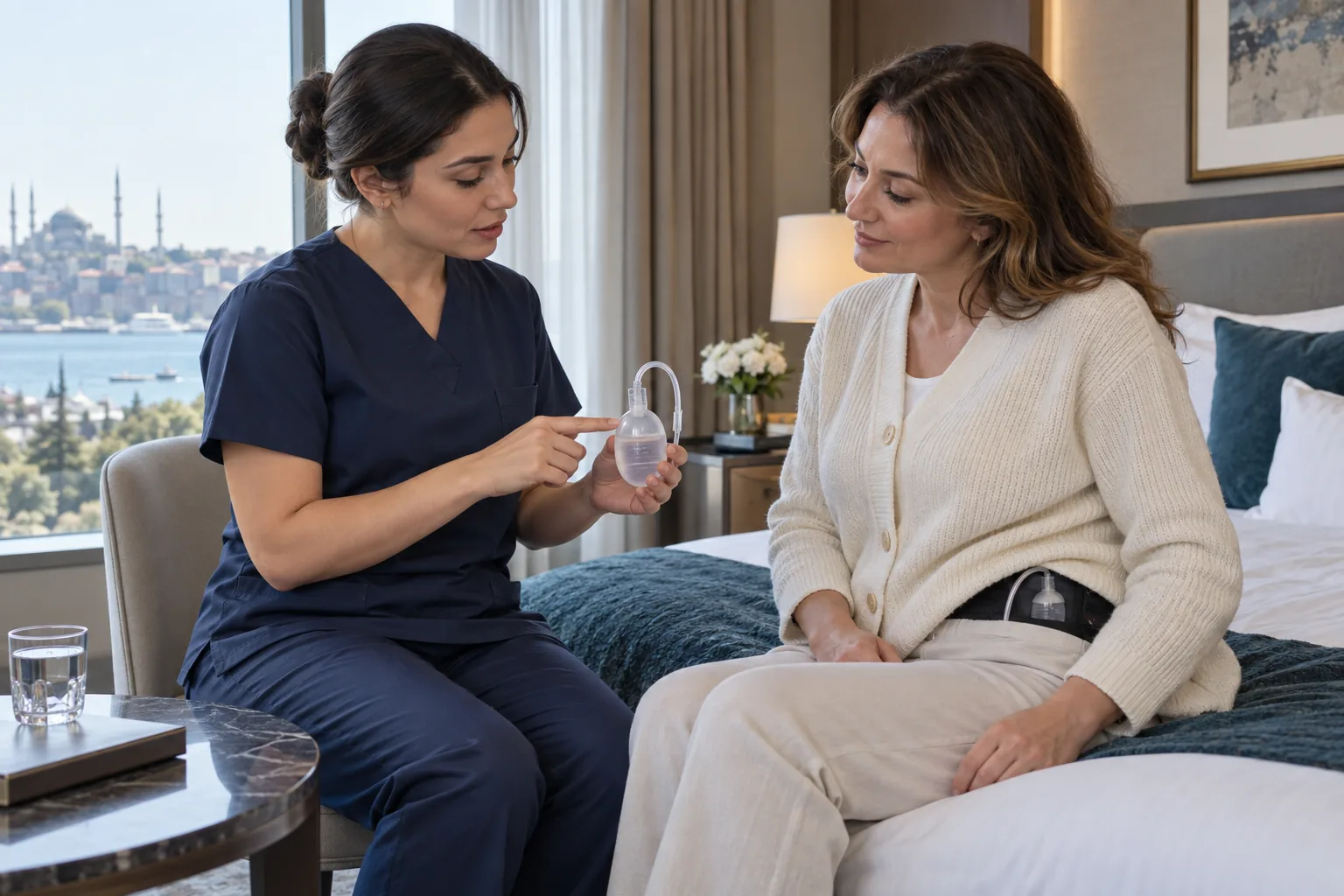
Track the observations your surgical team requested during an Istanbul recovery stay. A qualified provider can record findings and route concerns to the responsible clinician.
Ask about nursing or companion support at your hotel
Roles explained clearly
Nursing tasks and non-clinical companion support are discussed separately.
Plan-based coordination
Clinical tasks may require instructions from the treating team.
24/7 request line
WhatsApp and phone requests are accepted 24/7; the requested role and schedule remain subject to availability.
PRICING & SUITABILITY
Before you book
Quoted fee
The role, schedule, included tasks and quoted fee are confirmed before booking.
Nursing and companion roles
Clinical nursing tasks and non-clinical companion support are defined separately.
Recovery expectations
Aftercare supports an agreed plan but cannot guarantee recovery speed or outcome.
Recovery monitoring is a structured record of the patient’s condition, not a remote diagnosis. It is most useful when the treating team has said what to observe and how to report a change. CNR Medicare can coordinate a provider for an agreed observation plan while keeping interpretation and treatment decisions with the clinician.
Set the monitoring questions with the surgeon
Recovery monitoring should answer questions set by the surgeon, not collect every available measurement. Ask the treating team which symptoms, observations or vital signs matter after this operation and how often to record them. Define any reporting threshold in the clinician’s own words. A local provider can then plan an observation visit around the same clinical priorities.
CNR Medicare coordinates a qualified provider for an accepted monitoring plan. The provider records facts and may identify a change that needs assessment; the treating team interprets those findings and decides on treatment. A monitoring visit does not replace an instructed follow-up examination.
Record trends with time and context
A dated record makes a trend easier to understand. Note the time, the method used and what the patient was doing when an observation was made. A single number without context can mislead, especially if the device or measurement method changes. Compare findings with the patient’s own recent record and any threshold the clinic supplied.
Pain, temperature, pulse or blood pressure may be included when directed, but each measurement should have a clear purpose. A provider should not introduce extra tests merely because equipment is available. If a reading seems inconsistent with how the patient feels, the professional should assess it and seek clinical advice rather than filling the log mechanically.
Include mobility and daily function when relevant
Recovery also has functional details: whether the patient can move within the permitted limits, eat or drink as instructed, rest and follow the care plan. Record a meaningful change in these abilities as carefully as a measured value. New dizziness during movement or increasing difficulty walking may matter even when no device shows a striking number.
Describe nausea, vomiting, swelling or breathing changes with their onset and progression. The provider can help communicate a factual sequence to the surgical team. Photographs may supplement a record if appropriate and consented to, but they cannot replace examination or the clinical interpretation of the whole patient.
Keep the log useful rather than collecting numbers aimlessly
A useful log is concise enough for the treating team to review. Record new symptoms separately from changes in expected postoperative discomfort, and avoid vague words such as “better” when a more specific description is possible. State what was observed, when it changed and whether the team’s reporting threshold was reached.
Agree in advance how routine updates will be shared and who to contact for a concerning change. The patient may be recovering alone or with a companion, so identify who holds the surgeon’s contact details. If instructions are unclear, ask the clinic rather than inventing a threshold or observation schedule.
Share updates through the agreed clinic route
Monitoring can take place at suitable accommodation if the provider accepts the setting, equipment and patient needs. Give the address, access instructions and any mobility constraints. If the patient changes hotels, confirm the new location. The proposed visit schedule should fit the treating team’s clinical plan, not merely a convenient hotel calendar.
Before travel home, ask the original clinic what review or documentation is still required. A series of stable observations does not by itself establish that the patient is fit to fly. The treating team must make any clinical decision about travel and ongoing follow-up.
The patient and provider should agree what counts as a completed observation visit. A useful record includes the measurements or symptoms the surgeon requested, relevant context and any question that still needs an answer. It should not merely state that the patient was seen. If an observation could not be made, record why instead of entering a guessed value. Where the provider contacts the clinic, note the time and the advice received so a later helper does not mistake an unanswered concern for an approved change to the plan.
Act promptly when a change needs assessment
New or worsening symptoms may require medical assessment even when the next observation visit is already booked. Contact the surgical team promptly using its agreed route. The local provider can document and refer a concern but should not assure the patient that an unexplained change is harmless.
Before confirming monitoring, check the provider role, observations requested, equipment, reporting method and proposed cost. CNR Medicare coordinates the accepted arrangement while the surgeon’s written directions govern the clinical plan.
1Step 1: Contact CNR Medicare with your Istanbul location, preferred language, surgery details, recovery stage and the written monitoring instructions provided by your treating team.
2Step 2: Clarify which observations should be followed, how often they should be recorded, which thresholds or changes should be reported and which follow-up appointments remain with the original clinic.
3Step 3: Confirm the proposed provider, monitoring schedule, appointment location, required equipment or supplies, communication pathway and total proposed price before support begins.
4Step 4: During the monitoring period, agreed observations are recorded consistently and compared with the patient's previous condition rather than interpreted as isolated measurements.
5Step 5: Any meaningful deterioration, unexpected trend or observation meeting the treating team's escalation criteria is communicated to the responsible healthcare professional for the appropriate next step.
CNR Medicare coordinates medical services for visitors in Istanbul. We are not a hospital or a clinic: examination, treatment and laboratory analysis are carried out by the licensed health professionals and partner facilities we work with.
Send your request
Leave a contact number and a brief request. The team will clarify the proposed arrangements with you.
At your location
Frequently asked questions
What is Recovery Monitoring?
Recovery Monitoring is structured observation of a patient's general condition during postoperative recovery, with agreed symptoms, measurements and functional changes documented according to the treating team's instructions.
What can be monitored during recovery?
The exact plan varies. It may include general condition, pain trend, alertness, mobility, food and fluid tolerance, nausea, dizziness and selected measurements requested by the treating professional.
Does Recovery Monitoring include vital signs?
Temperature, pulse, blood pressure, oxygen saturation or other measurements can be included when the treating team has requested them or they form part of the agreed monitoring plan.
How often should recovery observations be recorded?
Follow the frequency provided by the treating team and confirmed in the monitoring plan. There is no single schedule that applies to every postoperative patient.
Can Recovery Monitoring tell me whether my recovery is normal?
Monitoring documents changes and trends. The responsible healthcare professional interprets those findings in relation to the procedure, recovery stage and patient's clinical situation.
What happens if my condition becomes worse?
Meaningful deterioration or an observation meeting the treating team's escalation criteria should be communicated to the responsible healthcare professional. Severe or rapidly worsening symptoms may require urgent assessment.
Does Recovery Monitoring replace my surgeon's follow-up?
No. Follow-up appointments that remain with the original treating clinic should continue as planned, and monitoring records can be shared when the clinical team requests them.
Can Recovery Monitoring be arranged at my hotel in Istanbul?
Hotel-based monitoring can be coordinated when the requested scope, provider availability, hotel access, schedule and proposed price have been confirmed.
What information should I provide before monitoring starts?
Share your Istanbul location, preferred language, surgery details, recovery stage, treating-team instructions, requested observations, reporting thresholds when provided and planned follow-up appointments.
How do I arrange Recovery Monitoring with CNR Medicare?
Contact CNR Medicare with your Istanbul location, preferred language, available dates, surgery details and monitoring instructions. The team can clarify the provider, schedule, observation scope, hotel access and proposed price before confirmation.
Need help right now?
Contact us to discuss your request and check service availability.