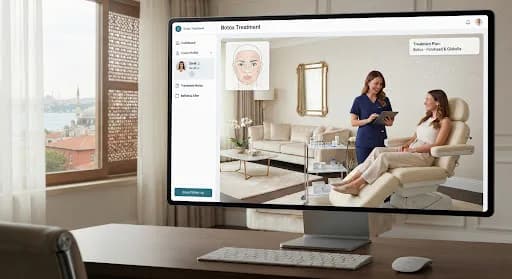
CNR Medicare coordinates Botox treatment in Istanbul for tourists and international visitors seeking clinician-led cosmetic care for selected facial expression lines. Medical history, facial movement, previous procedures and treatment goals are reviewed before an appropriate botulinum toxin plan and treatment setting are confirmed.
What botulinum toxin can and cannot address
Botulinum toxin is an injected medicine that changes activity in selected facial muscles. A clinician may discuss it when lines are related to expression, such as frowning or raising the eyebrows. It does not add volume beneath the skin and cannot correct every line seen at rest. The term Botox is a brand name; the exact medicine, its authorised use and the proposed treatment area should be explained by the treating professional.
Begin with the change you hope to discuss, not a requested injection pattern. Describe the expressions or features you want to preserve and any prior cosmetic treatment in the area. A photograph may help start the enquiry, but the clinician needs to assess facial movement and anatomy before deciding whether botulinum toxin, another treatment or no procedure is appropriate.
Assess the whole expression before choosing an area
Forehead lines, frown lines and lines around the eyes are not independent pieces of a diagram. Their appearance depends on muscle activity, brow position, skin condition and previous treatment. A clinician examines how the face moves at rest and during expression, then explains which concern a proposed treatment could reasonably address. The page cannot determine injection points or an amount for a particular person.
If the concern is mainly volume loss, contour or a line that persists without movement, ask whether the dermal filler consultation is the more relevant route. These are different medical products with different effects and risks. Combination treatment, if raised, must be considered as separate clinical decisions. A visitor should be able to understand why each proposed procedure is needed before agreeing to it.
Disclose history that changes the treatment decision
Tell the clinician about earlier botulinum toxin treatments, unexpected reactions, other facial procedures, medicines, supplements, allergies and conditions affecting muscle or nerve function. Mention pregnancy or breastfeeding if relevant. The clinician may need to postpone or decline an elective injection, request more information or recommend another provider. Do not stop prescribed medicine on the basis of a web page or booking message.
Ask who will perform the assessment and injections, which product is proposed and how post-treatment concerns are handled. Product sourcing, storage and the professional’s ability to recognise adverse effects matter. A coordinated appointment is not proof that the procedure is suitable; the treating professional makes that determination after reviewing you and the specific product.
Confirm the setting and consent before the procedure
CNR Medicare coordinates the enquiry, appointment and communication for visitors in Istanbul. The clinician decides where a procedure can be performed based on the medicine, required setup, infection control and ability to manage a complication. Sending a request from a hotel does not mean injections will take place in the room. Ask for the proposed venue and the person responsible for clinical care before confirming.
At the consultation, review the intended area, expected limitations, possible reactions, follow-up route and total proposed cost. Consent should be based on the actual plan, including alternatives and the option to defer treatment. If the assessment changes the original proposal, request an updated explanation before proceeding. An enquiry form or WhatsApp message starts coordination; it is not an automatic treatment booking.
Recognise ordinary reactions and concerning symptoms
Local tenderness, bruising or a headache may be discussed as possible reactions after an injection, but the clinician should explain what applies to the chosen product and area. Follow the instructions you are given rather than relying on a generic list of restrictions. If the effect or facial movement differs from what you expected, contact the treating professional for assessment instead of arranging another injection independently.
Difficulty swallowing or breathing, marked weakness or another serious new symptom requires immediate medical attention after a botulinum toxin injection. These warnings should be explained before treatment, along with a contact pathway that still works if you leave Istanbul.
Plan follow-up around travel, not a promised duration
Botulinum toxin effects vary with product, indication, anatomy and individual response. The clinician can tell you when to review the result and whether any further assessment is appropriate; a website cannot promise when an effect will appear or how long it will remain visible. If you previously had treatment elsewhere, bring the product and treatment details when available rather than relying on a general date alone.
Before travelling onward, ask how to reach the provider, which records you can keep and what to do if a concern arises after departure. Discuss any plan for repeat treatment only after the first response has been assessed. CNR Medicare can help coordinate communication, but clinical judgement and care remain with the treating professional.
1Describe your botulinum toxin treatment concern: Contact CNR Medicare with your Istanbul location, preferred language, areas of concern, previous Botox or botulinum toxin treatment and any important upcoming travel dates.
2Share relevant medical history: A qualified medical professional reviews your medical history, medications, supplements, allergies, previous aesthetic procedures and facial movement before treatment planning.
3Review the clinician’s proposed plan: The proposed treatment areas, product information when relevant, expected limitations, possible adverse effects, treatment setting and total proposed price are discussed before confirmation.
4Confirm the appointment and setting: The treating professional performs the injections according to the confirmed plan and provides procedure-specific post-treatment instructions.
5Understand follow-up instructions: Follow the clinician's instructions and arrange prompt medical review if unusual weakness, difficulty swallowing or breathing, significant visual symptoms or another concerning reaction develops.
CNR Medicare coordinates medical services for visitors in Istanbul. We are not a hospital or a clinic: examination, treatment and laboratory analysis are carried out by the licensed health professionals and partner facilities we work with.
Send your request
Leave a contact number and a brief request. The team will clarify the proposed arrangements with you.
At your location
Frequently asked questions
What is Botox treatment used for in medical aesthetics?
Cosmetic botulinum toxin is used to temporarily reduce activity in selected facial muscles and soften the appearance of certain expression-related lines, including commonly assessed frown lines, forehead lines and crow's feet.
Do I need a consultation before Botox treatment?
Yes. Facial movement, medical history, medicines, supplements, previous aesthetic procedures and treatment goals should be reviewed before the treating professional decides whether the procedure is appropriate.
How soon can I see the effect of Botox?
The treating clinician should explain when to review the response to the proposed product and area. A website cannot tell you exactly when an individual change will become visible.
Is the effect of botulinum toxin permanent?
No. The effect is temporary, but its persistence varies between people and treatment plans. Discuss follow-up with the injector rather than booking repeat injections to a standard timetable.
Is Botox the same as dermal filler?
No. Botulinum toxin temporarily reduces selected muscle activity, while dermal fillers are used for selected volume, contour or fold-related concerns depending on the product and indication.
Can Botox treatment be performed at my hotel in Istanbul?
Do not assume an injectable procedure will be performed in a hotel room. The treatment setting is confirmed according to the treating professional, procedure requirements, product handling and applicable standards.
What should I tell the clinician before treatment?
Share your medicines, supplements, allergies, relevant medical conditions, previous facial surgery, previous Botox or botulinum toxin treatment and other aesthetic procedures.
What reactions can happen after Botox injections?
Temporary redness, tenderness, swelling or bruising can occur. Nearby muscle effects such as temporary eyelid or brow drooping can also occur, while serious symptoms such as difficulty breathing or swallowing require prompt medical attention.
Can I have Botox again when the effect wears off?
Repeat treatment can be discussed when the effect diminishes, but timing should be determined by the treating professional after reviewing the previous response and current assessment.
How do I arrange Botox Treatment with CNR Medicare?
Contact CNR Medicare with your treatment goals, Istanbul location, travel dates, previous aesthetic procedures and preferred language. The team can coordinate clinician assessment, appointment details and pricing before confirmation.