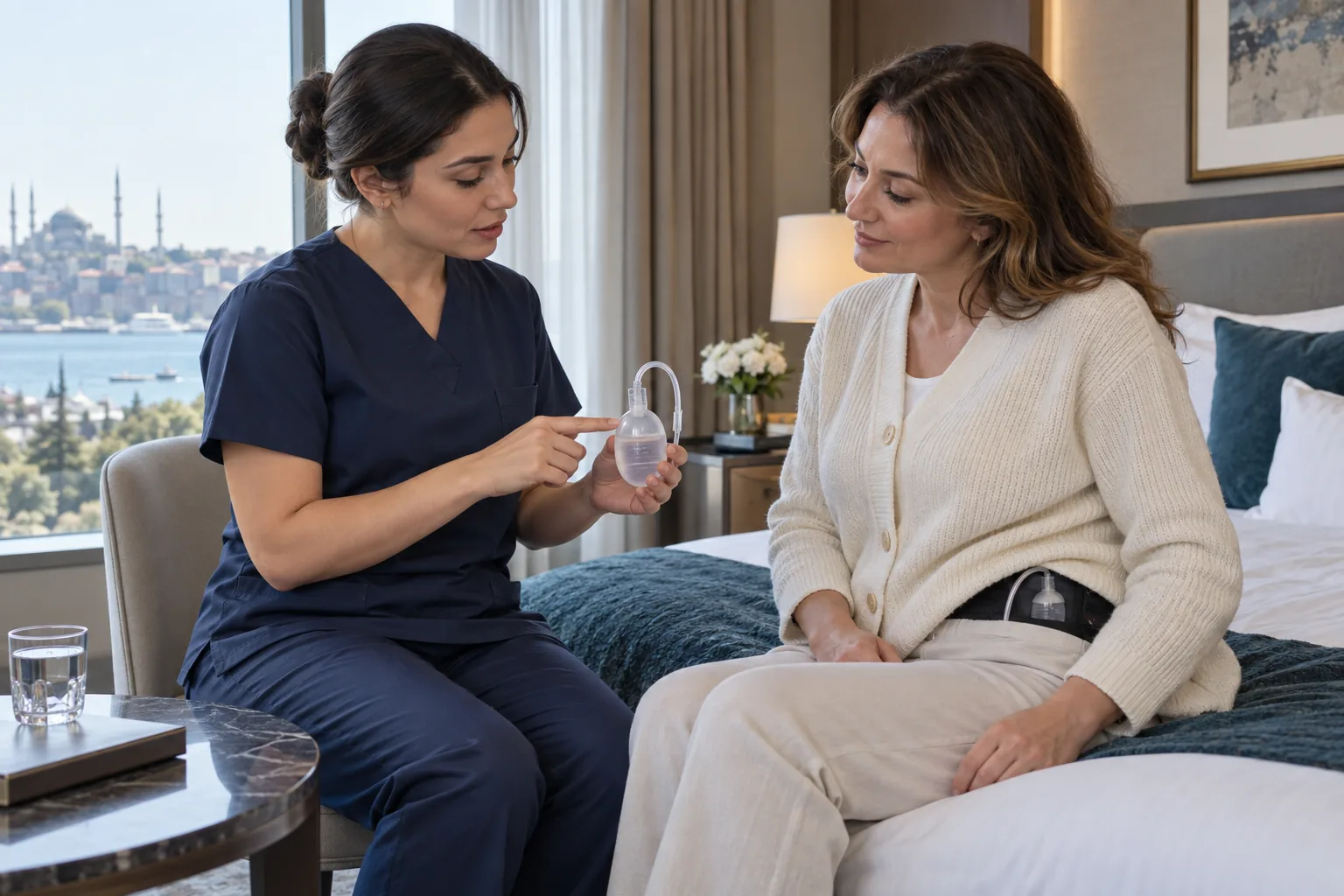
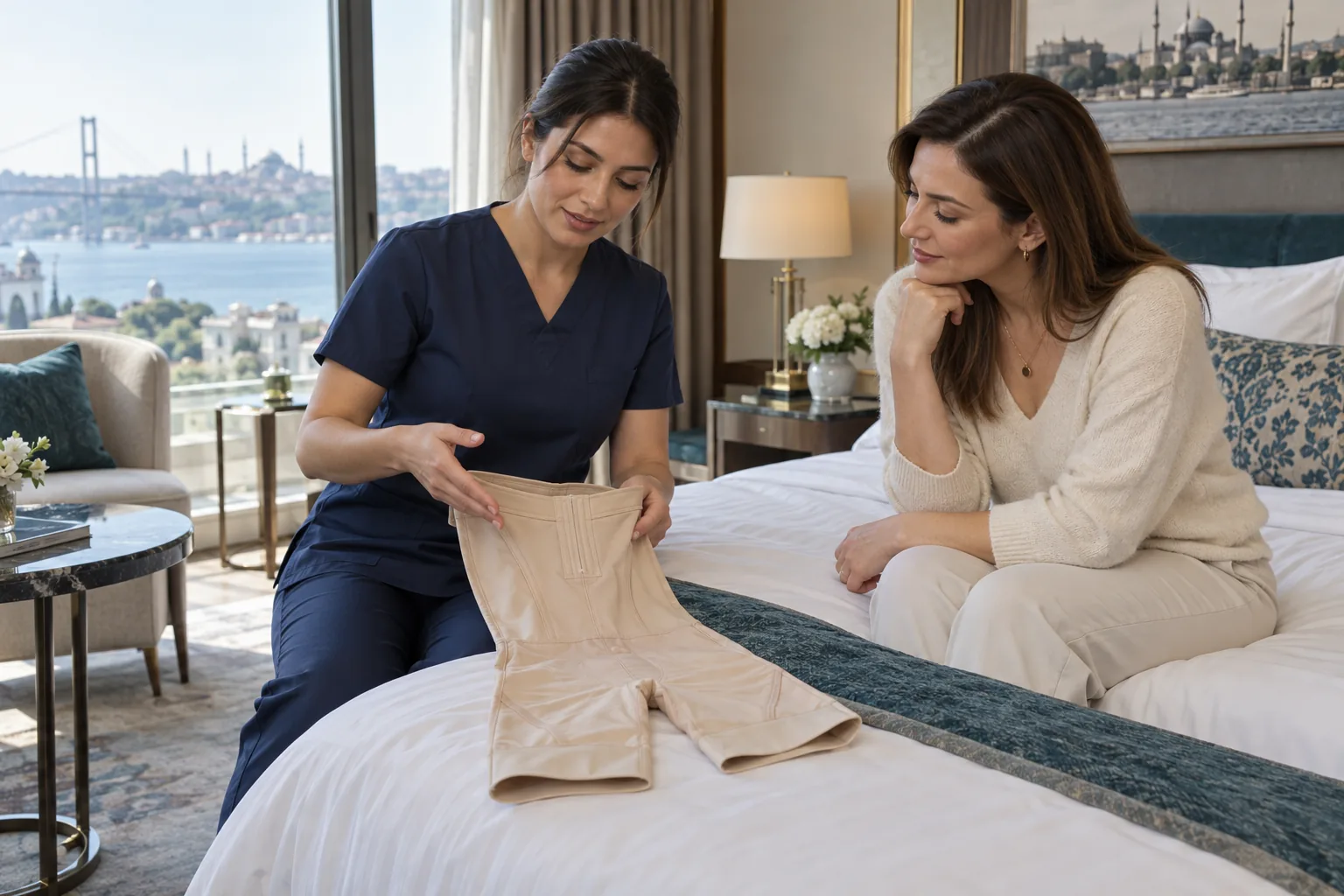
Ask about nursing or companion support at your hotel
Roles explained clearly
Nursing tasks and non-clinical companion support are discussed separately.
Plan-based coordination
Clinical tasks may require instructions from the treating team.
24/7 request line
WhatsApp and phone requests are accepted 24/7; the requested role and schedule remain subject to availability.
PRICING & SUITABILITY
Before you book
Quoted fee
The role, schedule, included tasks and quoted fee are confirmed before booking.
Nursing and companion roles
Clinical nursing tasks and non-clinical companion support are defined separately.
Recovery expectations
Aftercare supports an agreed plan but cannot guarantee recovery speed or outcome.
A post-surgical dressing is not a standard product applied to every wound. The closure, materials and change schedule belong to your surgical team’s plan. CNR Medicare can coordinate a qualified local provider to assess the requested visit and communicate a concerning change back to the treating clinic.
Identify the wound and the prescribed dressing task
A surgical wound may have stitches, staples, adhesive, packing or a special dressing, and each follows a different plan. Send the treating team’s written instructions and identify the wound site before asking for a local change. Tell the provider whether the request concerns a routine scheduled dressing or a new concern. The latter may need a clinician’s assessment before another dressing is applied.
CNR Medicare coordinates a qualified provider for an accepted task in Istanbul. The surgeon’s plan defines cleansing, materials and change schedule; the provider decides whether the patient and hotel setting are suitable. If the written direction is missing, do not select a dressing based on another patient’s experience. Ask the treating team to clarify what should happen.
Prepare the materials and space a provider needs
A useful request identifies the wound, the current dressing and any products the clinic supplied. Ask who will bring the prescribed materials and whether the provider needs a clean working surface or an assistant. A hotel towel or pharmacy substitute should not be assumed to meet a specific surgical instruction. Building access and privacy are part of arranging the visit.
The provider needs to know about allergies to dressing materials or adhesives and any difficulty moving into a position for care. If the guest changes rooms or accommodation, check the setting again. A task accepted at one address does not automatically transfer to another without the provider’s confirmation.
Observe changes without diagnosing from appearance
Observations during a dressing change can include the wound edges, surrounding skin, drainage and the old dressing. Report what is seen and when it changed rather than diagnosing from color alone. Redness, swelling, pain or bleeding must be interpreted in the context of the operation and the patient’s wider condition. A photograph may support communication if the patient consents and the surgical team accepts it.
A provider may recommend a doctor or surgeon review when a wound opens, new drainage appears or the patient develops other concerning symptoms. The dressing visit should not be used to hide an evolving problem. The treating team decides whether treatment changes, investigations or a different care setting are needed.
Follow the exact cleaning and replacement plan
Follow the exact cleansing and replacement method supplied by the clinic. Do not add an ointment, change packing material or use a different adhesive solely because it is available locally. If an old dressing sticks or a device is attached, the provider should act within professional scope and the current instructions, seeking clinical advice when they are insufficient.
Washing and showering restrictions may differ for an incision, open wound or specialized dressing. Keep those directions with the patient. If a dressing becomes wet or loose between planned visits, contact the provider or treating team for the appropriate next step instead of automatically increasing the frequency of changes.
Protect the wound while staying in a hotel
A hotel visit needs a clear appointment, adequate supplies and a way to maintain patient dignity. Ask who can enter the room and whether the wound can be reached without violating a movement restriction. The professional may decide that equipment or a clinical environment is required. In that case, a separate facility arrangement must be confirmed.
Keep the original clinic follow-up even when local dressing care is working smoothly. The surgeon may need to review closure, wound progress or another part of recovery that a dressing appointment does not cover. Record completed visits so that the clinic knows which materials were used and when.
If the wound is part of a larger postoperative plan, identify any drain, adhesive strip or garment that overlaps the dressing area. Changing one item may disturb another. The provider should know which materials the clinic applied and whether the surgeon wants them left in place until a review. A wound note should identify the site and the date of the last change, so a later clinician can follow what happened without relying on memory. This is particularly helpful when care continues after the visitor leaves Istanbul.
Escalate a concern before the next routine change
New wound-edge separation, increasing bleeding, fever with a concerning wound or another significant change should be brought promptly to the surgical team. A routine booking should not delay medical assessment. The local provider can describe findings and recommend onward care; it cannot independently replace the surgeon’s treatment plan.
Before confirming the service, check the wound task, qualified provider, dressing supplies, setting, proposed cost and reporting route. CNR Medicare coordinates the accepted arrangement.
1Step 1: Contact CNR Medicare with your Istanbul location, preferred language, surgery date, wound location and the written dressing or wound-care instructions provided by your surgeon or clinic.
2Step 2: Clarify the exact tasks requested, including dressing changes, wound observation, prescribed cleansing, supply needs and the planned frequency of visits.
3Step 3: Confirm the proposed provider, appointment location, available time, required materials, original clinic follow-up contact and total proposed price before the first visit.
4Step 4: During each appointment, the wound-care tasks are performed according to the treating team's instructions, with attention to the condition of the wound, surrounding skin, dressing and any changes that need escalation.
5Step 5: Continue following the surgeon-directed wound plan between visits and contact the responsible medical team if the wound opens, bleeding increases, drainage changes, pain or swelling worsens, fever develops or another concerning change occurs.
CNR Medicare coordinates medical services for visitors in Istanbul. We are not a hospital or a clinic: examination, treatment and laboratory analysis are carried out by the licensed health professionals and partner facilities we work with.
Send your request
Leave a contact number and a brief request. The team will clarify the proposed arrangements with you.
At your location
Frequently asked questions
What is Dressing & Wound Care?
Dressing & Wound Care is postoperative support for a surgical wound or incision according to the treating team's instructions. It can include prescribed dressing changes, wound observation, cleansing and escalation of concerning changes.
Can a nurse change my surgical dressing at my hotel in Istanbul?
A dressing-change visit can be coordinated at a hotel, Airbnb or residence when the requested wound-care tasks, provider availability, supplies and accommodation access have been confirmed.
How often should my surgical dressing be changed?
Follow the schedule provided by your surgeon or treating clinic. Different wounds and dressing products have different change intervals, and some dressings should remain in place for a defined period unless they become wet, heavily soiled or otherwise compromised.
What if my dressing becomes wet or soaked before the next visit?
Follow your postoperative instructions and contact the provider or treating team. A wet, heavily stained, contaminated or loose dressing may need earlier replacement depending on the wound and dressing type.
What wound changes should I report?
Report increasing redness, swelling, pain, bleeding, wound-edge separation, increasing or unusual drainage, unpleasant odor, fever or another significant change listed in your discharge instructions.
Can I put antibiotic cream or another product on the wound?
Use topical products only when they are included in the treating professional's instructions. Do not add creams, powders, antiseptics or herbal products simply because the wound is covered with a dressing.
Can I shower with my surgical dressing?
Shower instructions depend on the procedure, closure and dressing. Confirm whether showering is permitted, whether the dressing stays on and how the area should be handled afterward according to the surgeon's plan.
What if my stitches, staples or adhesive strips start coming loose?
Do not remove or replace closure materials yourself. Contact the responsible surgical team if the wound begins to open, a closure releases earlier than expected or the incision appearance changes.
Does Dressing & Wound Care replace my surgeon's follow-up?
No. Hotel wound-care support follows the existing postoperative plan, while clinical decisions, wound reassessment and scheduled surgical follow-up remain with the responsible treating team.
How do I arrange Dressing & Wound Care with CNR Medicare?
Contact CNR Medicare with your Istanbul location, preferred language, surgery date, wound location, written instructions and the exact help required. The team can coordinate the provider, visit schedule, supplies, hotel access and proposed price before confirmation.