Skip to content
CNR Medicare

Aftercare

Post-Surgery Care at Your Hotel in Istanbul

Recovery continues after you leave the clinic. Arrange suitable support at your Istanbul accommodation while keeping your own surgeon’s instructions and follow-up at the centre of the plan.

Caregiver with a tablet talking with a woman sitting on an adjustable bed in a room overlooking Istanbul
  • Nurse at your hotel in 30–60 min
  • 24/7 WhatsApp & phone

HOTEL AFTERCARE REQUESTS · ISTANBUL

Ask about nursing or companion support at your hotel

  • Roles explained clearly

    Nursing tasks and non-clinical companion support are discussed separately.

  • Plan-based coordination

    Clinical tasks may require instructions from the treating team.

  • 24/7 request line

    WhatsApp and phone requests are accepted 24/7; the requested role and schedule remain subject to availability.

PRICING & SUITABILITY

Before you book

  • Quoted fee

    The role, schedule, included tasks and quoted fee are confirmed before booking.

  • Nursing and companion roles

    Clinical nursing tasks and non-clinical companion support are defined separately.

  • Recovery expectations

    Aftercare supports an agreed plan but cannot guarantee recovery speed or outcome.

A hotel room can provide a place to rest after an operation, but it does not function as a clinical ward. Post-surgery hotel care brings together the visits and practical arrangements that a treating team has recommended or that you cannot manage alone under the recovery plan. CNR Medicare coordinates suitable providers; the surgeon remains responsible for clinical decisions.

Turn the hotel room into a workable recovery setting

The height of the bed, path to the bathroom and ability to admit a visitor can matter when movement is restricted. Describe these practical conditions before a visit. The provider can then say whether the task is appropriate at that address and what space or supplies are needed.

Hotel staff should not be presumed to provide medical assistance. If reception must admit a visitor, settle the process in advance while protecting the patient’s privacy. A room change, a different building entrance or a checkout can affect a confirmed visit. Ask whether a chair, bathroom support or companion presence is needed for the patient to reach the treatment area. If the visit requires the patient to stand or move in a way the surgeon restricted, the provider needs to know before accepting. A hotel address alone says little about what can actually be done inside the room.


Define the care that actually belongs in the room

A dressing change, recorded observation and help fastening a garment are different requests. A qualified professional assesses whether a clinical task can be performed in the accommodation. A practical assistant may support ordinary routines within the surgeon’s restrictions, but cannot take over procedures requiring nursing qualification.

Send the full discharge instruction rather than a summary such as “post-op care needed.” The provider needs the correct procedure context, planned task and any device or dressing details. If written directions are unavailable, contact the original clinic for them. A written instruction should name the wound or device, the intended task and the reporting threshold if one was provided. If several specialists have given directions, identify the team responsible for the postoperative plan. Where the provider sees a conflict, the task should be clarified clinically instead of completed by guesswork. The hotel room should be considered a temporary care setting, not simply a delivery address. Identify whether the patient can answer the door, sit upright and reach the area where the provider expects to work. If those assumptions are wrong, a planned narrow task can become impractical upon arrival.

Arrange movement and privacy around the patient

The patient may need help opening the door, reaching the bathroom or positioning for a visit. Explain what they can do independently and what support they have from a companion. This helps avoid promising a visit that relies on assistance no one has arranged.

Privacy matters for wound care, washing and medical discussion. Agree who may be present and who can receive updates. The patient’s preference should guide communications with hotel staff or travelling companions, subject to the provider’s clinical needs. The patient should choose who remains during a sensitive visit where possible. The professional may still need another person for assistance, so ask about that in advance. A private room does not establish an appropriate working environment if there is no suitable surface, lighting or access to the supplies the task requires.

Keep the clinic connected to what happens at the hotel

The operating team should remain reachable for questions about a wound, drain, medication or unexpected symptom. A visiting professional can document observations and recommend contacting that team. The surgeon determines changes to the plan and whether a clinic review is required.

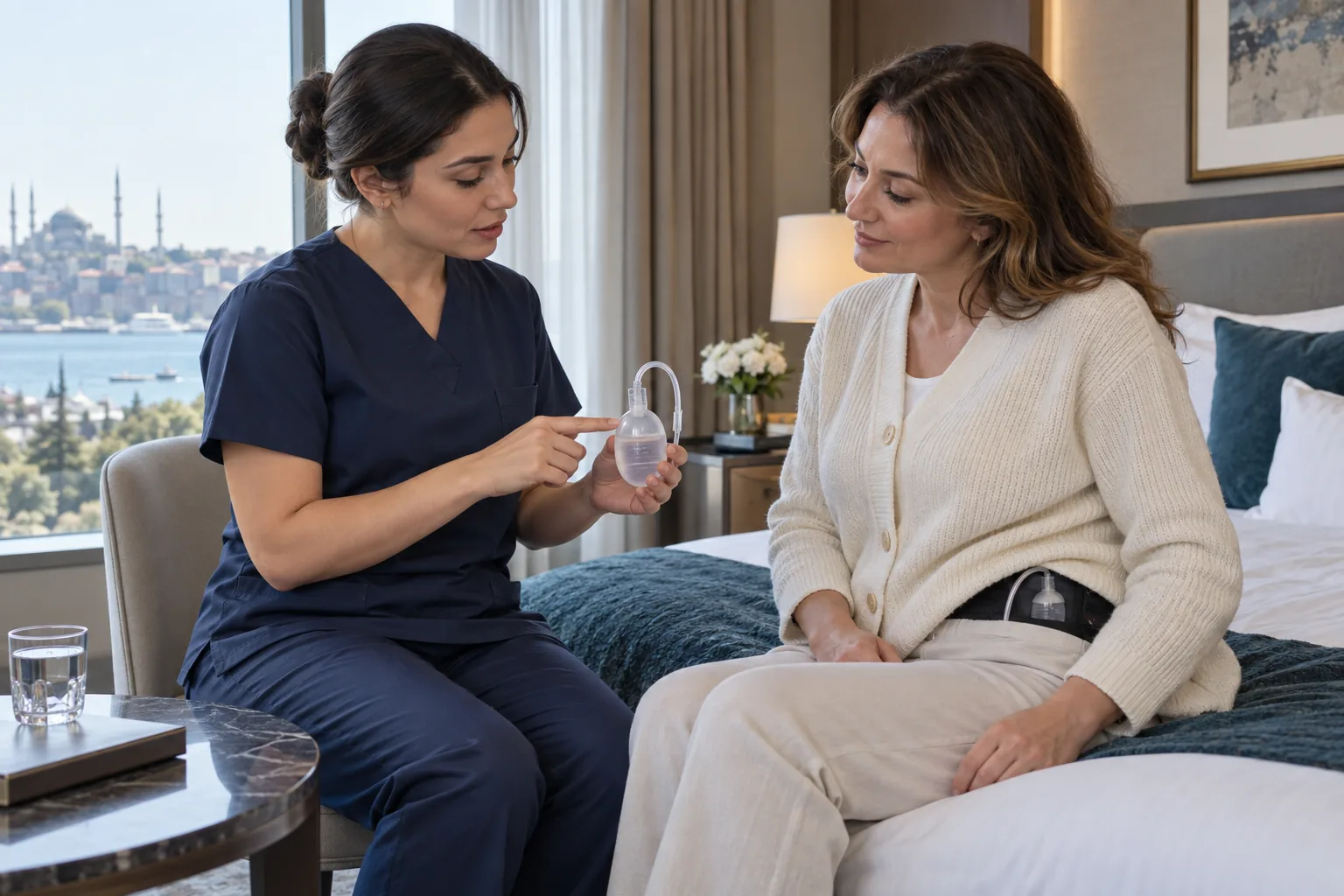
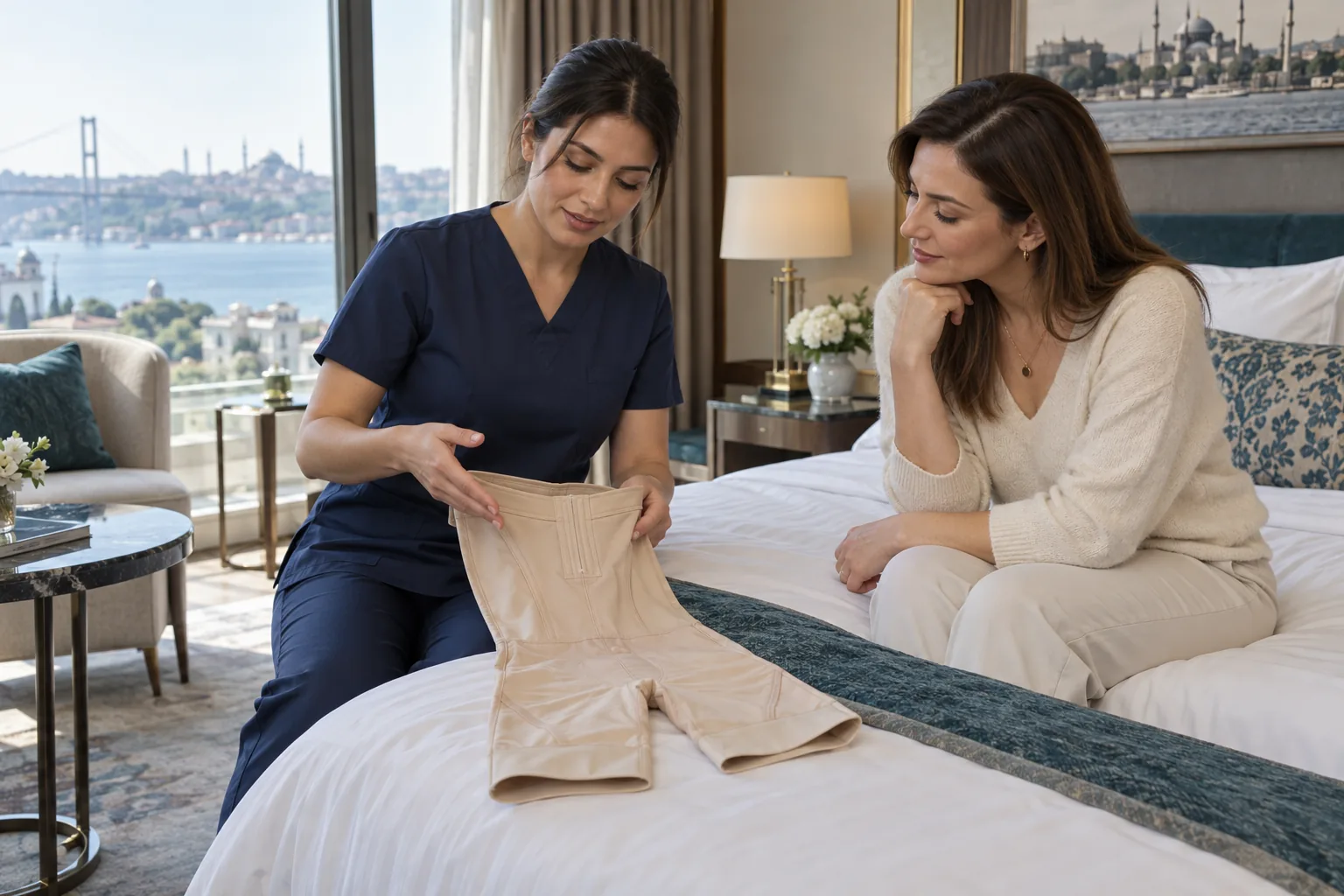
Do not use a quiet day in the hotel as proof of fitness for travel. The treating team should address any travel restriction or required follow-up. Arrange the visit schedule around the clinic’s decisions rather than asking the provider to work toward a flight deadline. If a provider records an unexpected finding, agree whether it will be sent to the clinic and who will make that contact. A concise record of the finding and time is more useful than an informal assurance that things look normal. The next clinical instruction should come from the treating team, and the coordinator can then revise the visits. When the surgeon has placed a drain or prescribed a garment, include its instructions with the request. The provider may need a different professional role or specific material. The existence of the device does not authorize local removal or a change to its use.

Respond to deterioration through the right channel

A planned visit is unsuitable as the only response to worsening symptoms. Contact the treating surgical team promptly if the recovery course changes, and tell the visiting provider if a new concern appears before the appointment. The planned task may need assessment or a different setting.

Check the boundaries of the hotel-care quote

Ask whether the proposed arrangement covers one visit, several tasks, a period of attendance, supplies or transport. These elements may be quoted separately. Confirm the professional role, address, appointment and what happens if the surgeon changes the instructions.

CNR Medicare coordinates the booking and communication. The healthcare provider determines whether the requested care fits the patient and setting, while the surgeon directs the postoperative plan. Keep the written confirmation with the patient’s clinic contact details. If the quote includes a series of visits, confirm how a cancellation, room change or revised surgical plan affects the remaining appointments. Ask for written details about what will be performed during each visit and who is responsible for documentation. That clarity helps the patient and clinic understand what support actually occurred. Ask what will happen if a clinic assessment is recommended during a hotel visit. The patient may need transport, an escort or translation support to follow that recommendation. Those services should be discussed as separate arrangements, rather than silently assumed to be part of bedside care. Ask the provider to name the contact who will be responsible if the arrangement must be changed after the patient has returned to the room.

Related services

How it works

  1. Send discharge details: Share the operation context, written plan and hotel address.
  2. List the tasks: Specify what needs professional care and what requires practical assistance.
  3. Review visit conditions: Confirm provider scope, room access, supplies, appointment and cost.
  4. Maintain follow-up: Report clinical changes to the surgeon and keep the clinic review route open.

CNR Medicare coordinates medical services for visitors in Istanbul. We are not a hospital or a clinic: examination, treatment and laboratory analysis are carried out by the licensed health professionals and partner facilities we work with.

Send your request

Leave a contact number and a brief request. The team will clarify the proposed arrangements with you.

At your location

Frequently asked questions

Can a nurse come to my hotel after surgery?

A suitable visit can be explored after the task, written instructions, address and provider availability are reviewed. The provider decides whether the procedure is appropriate in that room.

Does the hotel provide the medical supplies?

Do not assume so. List the supplies named by the clinic and ask the proposed provider which items it can bring or needs available.

Can I change rooms after booking?

Tell the coordinator before the visit. The address, building access and treatment space need reconfirmation with the provider.

Is washing assistance the same as a nursing visit?

No. Practical hygiene assistance and a clinical nursing task have different scopes. Describe both needs separately if you require them.

Can the visiting professional change my recovery instructions?

Your surgeon’s written plan governs postoperative care. If it becomes unclear or unsuitable, the visiting professional should seek clarification or recommend medical assessment.

What if I cannot attend my clinic follow-up?

Contact the treating clinic directly and ask for its advice. A hotel visit should not silently replace a scheduled surgical review.

Can my companion receive updates?

With the patient’s agreement, identify who may be included in practical planning and clinical communication. Tell the provider how consent and privacy should be handled.

Does hotel care include transport back to the clinic?

Only if that service is specifically arranged and confirmed. State any mobility or access needs when asking about transport.

Need help right now?

Message us for post-surgery care.

Updated

Send a request