Skip to content
CNR Medicare

Medical Aesthetics

Hair PRP Treatment Istanbul

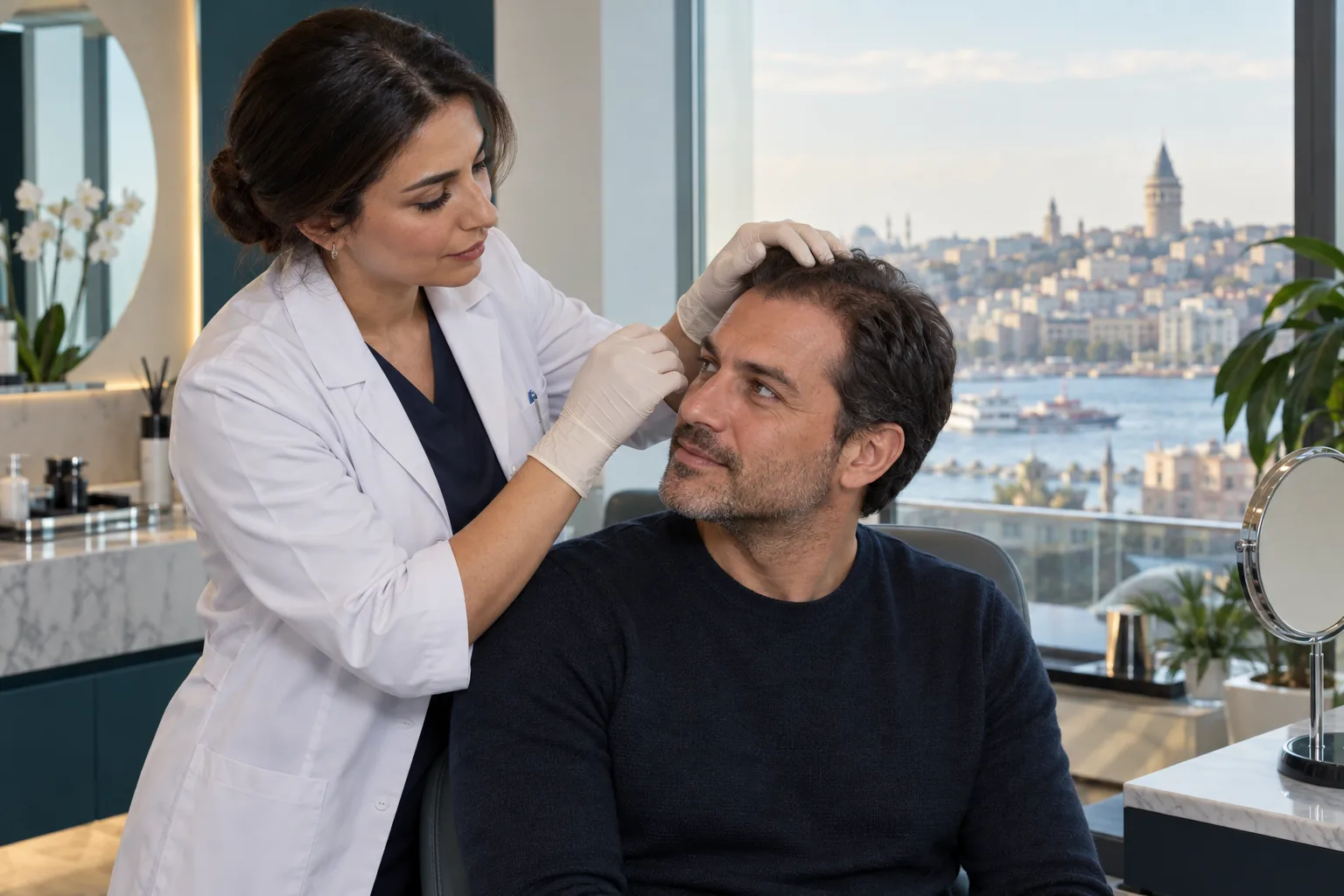
Photo illustrating Hair PRP Treatment Istanbul
  • English speaking

CNR Medicare coordinates hair PRP assessment for visitors in Istanbul. A clinician examines the scalp, reviews the cause of hair loss and decides whether PRP is suitable and where treatment should take place.

Begin with the cause of hair loss

Hair PRP uses platelet-rich plasma prepared from your blood for a clinician-directed scalp procedure. It may be discussed in some hair-loss plans, but thinning hair has different causes and a scalp injection cannot address every one. The first useful step is an assessment of the pattern, duration and associated scalp symptoms rather than choosing a procedure by name alone.

Tell the clinician about sudden shedding, patchy loss, pain, scaling or inflammation, previous hair transplantation and treatments already tried. The practitioner may recommend examination or testing before considering PRP. CNR Medicare coordinates the assessment for visitors in Istanbul; diagnosis and the decision to offer an injection remain with the clinician.

Hair loss can look similar in photographs while having very different causes. Tell the practitioner whether shedding began suddenly, whether the scalp is painful or inflamed, and whether relatives have had a similar pattern. A change after illness, a new medicine or surgery may also be relevant to the assessment. These details do not diagnose the cause on their own, but they help the clinician decide whether scalp examination, laboratory work or another referral should come first. A patient should understand that decision before committing to blood collection and scalp injections.

Understand the blood-processing pathway

The provider collects a blood sample, processes it with appropriate equipment and applies the resulting preparation to selected scalp areas according to a treatment plan. Ask who performs each step, where processing takes place and what method will be used. PRP is not a hair transplant and does not place new follicles in the scalp.

Because collection, processing and injection all need a suitable setup, the procedure location is determined by the treating provider. Contacting the team from a hotel does not mean it can be carried out in a hotel room. The professional should explain the intended setting, infection-control arrangements and how any adverse event would be handled before you confirm.

Check suitability and competing explanations

Before treatment, discuss medicines, supplements, bleeding problems, allergies, past scalp procedures and significant medical conditions. Mention whether hair loss appeared abruptly or is accompanied by an irritated or painful scalp. Those details may lead the clinician to investigate a condition that should be addressed before elective PRP. Do not stop treatment or medication without professional advice.

If you already have a plan from a dermatologist or transplant surgeon, bring it for review. PRP may be one part of a wider plan, but the practitioner must decide whether it fits alongside current treatment. It should not be described as restoring hair for everyone or replacing the diagnosis of an underlying cause.

Review a plan without a fixed session promise

The clinician may propose an initial treatment and later review, or decide that PRP is not the right option. Ask which observation would show whether the approach remains appropriate, what follow-up is available after you leave Istanbul, and whether another provider at home will need records. The number or spacing of appointments depends on the individual plan; this page does not set one.

Before consenting, review the proposed provider, procedure setting, quote and what each appointment includes. A WhatsApp message can begin scheduling, but it cannot establish clinical suitability. If you have limited time in Istanbul, explain the departure date so the professional can judge what assessment and follow-up are practical.

Know the limits of the expected response

Hair changes are gradual and individual responses differ. Discuss what the clinician will track, such as shedding, visible density or scalp condition, and how photographs might be used consistently. A person with a different cause of hair loss may need a different treatment entirely. Avoid a promise of a full head of hair, a fixed response time or a permanent result.

Blood collection and scalp injections can cause discomfort, bruising or local irritation. Ask for specific aftercare instructions and a way to report worsening pain, swelling or signs of infection. If a reaction seems unusual, seek the treating team’s assessment rather than arranging another session based only on an online schedule.

Keep care connected after travel

If PRP is part of care following a hair transplant, confirm how the transplant surgeon’s instructions affect timing and scalp handling. The two procedures have different purposes and should not be combined merely because both relate to hair. Ask which professional remains responsible for follow-up and how their advice will be shared.

Related services

Need help right now?

Share your hotel, symptoms or service request on WhatsApp to ask about service availability.

How it works

  1. Describe your hair prp treatment concern: Contact CNR Medicare with your Istanbul location, preferred language, main hair-loss concern, how long it has been present, previous hair treatments and relevant travel dates.
  2. Share relevant medical history: A qualified medical professional reviews the pattern of hair loss, scalp condition, medical history, medicines, supplements, previous procedures and whether further diagnostic assessment is needed.
  3. Review the clinician’s proposed plan: If Hair PRP is considered appropriate, the proposed session plan, scalp treatment areas, procedure setting, expected limitations, possible adverse effects and total proposed price are discussed before confirmation.
  4. Confirm the appointment and setting: During the procedure, blood is collected and processed to prepare platelet-rich plasma, which is then administered to the planned scalp areas by the treating professional.
  5. Understand follow-up instructions: Follow the clinician's post-procedure instructions and attend recommended follow-up so response, ongoing hair loss and the need for additional sessions or another treatment can be reassessed.

Hair PRP

Contact us about hair PRP.

CNR Medicare coordinates medical services for visitors in Istanbul. We are not a hospital or a clinic: examination, treatment and laboratory analysis are carried out by the licensed health professionals and partner facilities we work with.

Send your request

Leave a contact number and a brief request. The team will clarify the proposed arrangements with you.

At your location

Frequently asked questions

What is Hair PRP treatment?

Hair PRP is a procedure in which a small amount of the patient's blood is collected, processed to prepare platelet-rich plasma and then injected into selected areas of the scalp according to a clinician-led treatment plan.

Can Hair PRP be used for every type of hair loss?

No. Hair loss has many causes. PRP may be considered for selected types, including some patients with pattern hair loss, but diagnosis and scalp assessment should come before treatment planning.

How many Hair PRP sessions will I need?

The clinician needs to assess the cause of hair loss before proposing any series. Ask how the response will be reviewed and when a different diagnosis or treatment would change the plan.

How soon can Hair PRP results be assessed?

Hair response is not judged from the scalp’s appearance immediately after an injection. The treating clinician should explain the observations and follow-up that make sense for your diagnosis.

Can Hair PRP completely restore lost hair?

No. Hair loss has different causes, and PRP cannot be described as restoring all lost hair. A clinician should diagnose the pattern and explain whether PRP has a role in your plan.

Can Hair PRP be combined with other hair-loss treatments?

Potentially. A clinician may use PRP alongside another treatment when this fits the diagnosis and wider hair-restoration plan. Medication or other therapies should not be added or changed without appropriate clinical guidance.

Can Hair PRP be used around a hair transplant?

PRP may be discussed as a supporting procedure in selected hair-transplant plans, but timing and suitability should be determined by the clinicians involved in the transplant and hair-loss treatment.

What reactions can occur after Hair PRP?

Temporary scalp tenderness, mild swelling, bruising, local bleeding or sensitivity can occur. Persistent or worsening pain, infection signs or another unusual reaction should receive professional assessment.

Can Hair PRP be performed at my hotel in Istanbul?

Do not assume the procedure will be performed in a hotel room. Hair PRP requires blood collection, processing equipment and scalp injections, so the procedure setting is confirmed according to provider and clinical requirements.

How do I arrange Hair PRP with CNR Medicare?

Contact CNR Medicare with your hair-loss concern, Istanbul location, travel dates, previous treatments and preferred language. The team can coordinate clinician assessment, appointment details, treatment planning and pricing before confirmation.

Updated

Send a request